
🤖 AI Is Changing the Companion Doll Industry
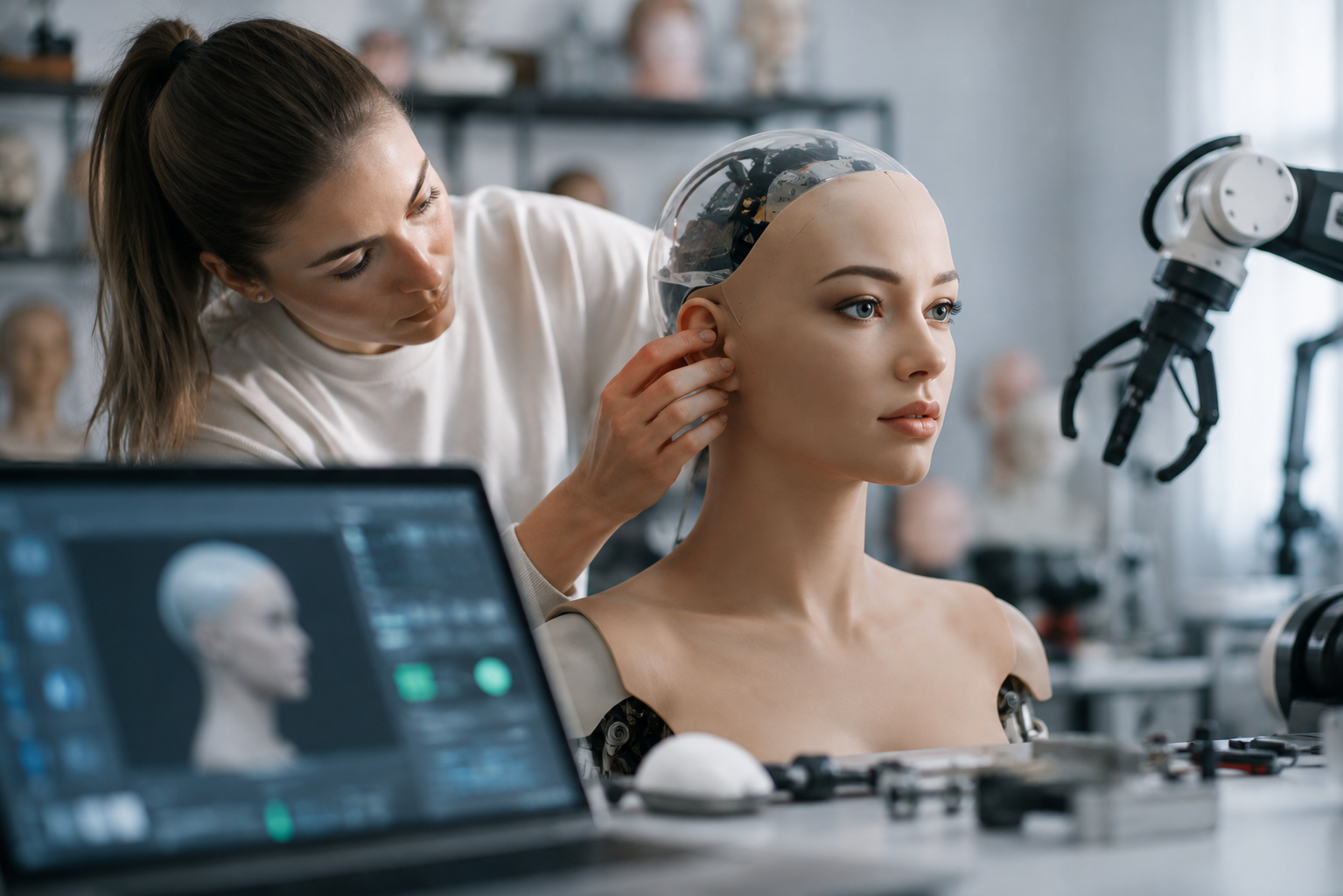
Artificial intelligence is transforming the sex doll industry from relatively simple lifelike products into increasingly interactive digital companions.
Newer products can combine realistic physical designs with customizable personalities, memory, mobile applications and sensors that respond to interaction.
The technology is creating a new category of AI-powered companion products while also raising difficult questions about how increasingly human-like machines may affect people's attitudes and relationships.
💰 Global Market Continues to Expand
The commercial market behind these products is already substantial.
A 2026 market analysis cited in the source estimated that the global sex doll market was worth approximately $6.6 billion in 2025 and projected it could reach about $13.4 billion by 2033.
That expected expansion is happening alongside major improvements in artificial intelligence and manufacturing technology.
🧠 Customizable AI Personalities Arrive
One of the biggest developments is the ability to customize not only a doll's appearance but also its simulated personality.
RealDoll's Harmony project is an example. According to the source, its newer model allows users to select personality characteristics through a smartphone application.
This represents a significant change from products designed primarily around physical appearance.
The objective is increasingly to create the experience of an interactive companion capable of responding to its owner.
📱 AI Companions Can Remember Conversations
Other companies are pushing the technology further.
At CES 2026, Singapore-based sex-tech company Lovense presented an AI-powered companion called Emily.
According to the source, the system offers different personality modes, can generate requested selfies and can remember previous conversations. The company expects shipping to begin in the first quarter of 2027.
Memory is particularly important because it can make interactions feel continuous rather than starting from zero during every conversation.
🖨️ Custom Designs Are Becoming More Advanced
Manufacturing improvements are also allowing much greater physical customization.
3D printing and advanced molding techniques can produce highly individualized designs.
Some businesses even offer custom heads based on reference photographs. The source reports that Los Angeles-based Coeros says its service can model a head using photographs of a real person, an original character or an AI-generated image.
This technology introduces an important consent issue when photographs of real people are involved.
⚠️ Questions About Using Someone's Likeness
As realistic customization becomes easier, companies may increasingly have to address whether customers have permission to reproduce another person's appearance.
Coeros told the Guardian that its customization service should not be interpreted as permission to use another person's likeness without consent and said it does not support harassment, impersonation or other non-consensual uses.
The issue resembles broader debates surrounding AI-generated images and deepfakes: technology can make realistic replication possible even when the person being reproduced never agreed to it.
🧩 Researchers Debate the Social Impact
The rapid development of these products has also attracted researchers studying human behavior, relationships and gender attitudes.
Johannes Fuss, chair of forensic psychiatry and sex research at the University of Duisburg-Essen, told the Guardian that researchers currently lack strong long-term evidence showing whether use of such dolls reduces harmful behavior or could increase real-world risks. He argued that more research is urgently needed as technologies become increasingly capable of simulating human sexuality.
That uncertainty is important. There is currently not enough evidence to make a simple conclusion that these products either cause harmful behavior or prevent it.
🧍 Not Every Owner Fits the Same Profile
People within the industry also caution against treating every owner as belonging to the same category.
Tammie Paine, an Adelaide adult-store owner interviewed by the Guardian, said her experience does not support the assumption that owning a doll automatically reveals something negative about someone's character.
The market can include people looking for companionship as well as consumers primarily interested in the physical product.
🚨 Realistic Dolls Can Create Unexpected Problems
The increasing realism of the products can also create problems outside the home.
In Australia, people discovered what appeared to be the body of a woman inside a suitcase on a rural road. Police became involved before forensic examination determined that it was actually a damaged sex doll rather than a human body.
The incident demonstrates how realistic these products can appear and how improper disposal can cause unnecessary alarm.
♻️ Disposal Becomes a New Industry Issue
As sales increase, companies are also beginning to address what happens when owners no longer want these large and realistic products.
Australian retailer SxDolled offers a discreet disposal service. Its owner argued that appropriate disposal can prevent dolls from being abandoned in public locations, where they may cause panic and consume emergency-service resources.
Responsible disposal could therefore become a larger practical issue as the market expands.
🔎 A Growing Technology With Unanswered Questions
AI is pushing companion dolls toward greater realism, personalization and interactivity.
The industry could grow significantly over the coming years, but technological development is moving faster than clear answers to many of the social questions surrounding it.
Consent when reproducing someone's appearance, responsible disposal, increasingly human-like AI interaction and the possible psychological or social effects of these products are likely to remain major areas of debate as the technology develops.
News
AI-Powered Companion Dolls Are Becoming More Realistic as Global Market Expands
The global sex doll market is growing rapidly as artificial intelligence, customizable personalities, sensors and realistic designs make companion dolls increasingly sophisticated. The expansion is also creating debate around consent, human likeness, social attitudes and responsible disposal.
⚡ QUICK TAKE
The global sex doll market is growing rapidly as artificial intelligence, customizable personalities, sensors and realistic designs make companion dolls increasingly sophisticated. The expansion is also creating debate around consent, human likeness, social attitudes and responsible disposal.
SourceThe Guardian ↗